TPL_YOOTHEME_SKIP_TO_MAIN_CONTENT

Digital Business

Click Frenzy back in action – with EOFY sale event free for 500 Aussie retailers

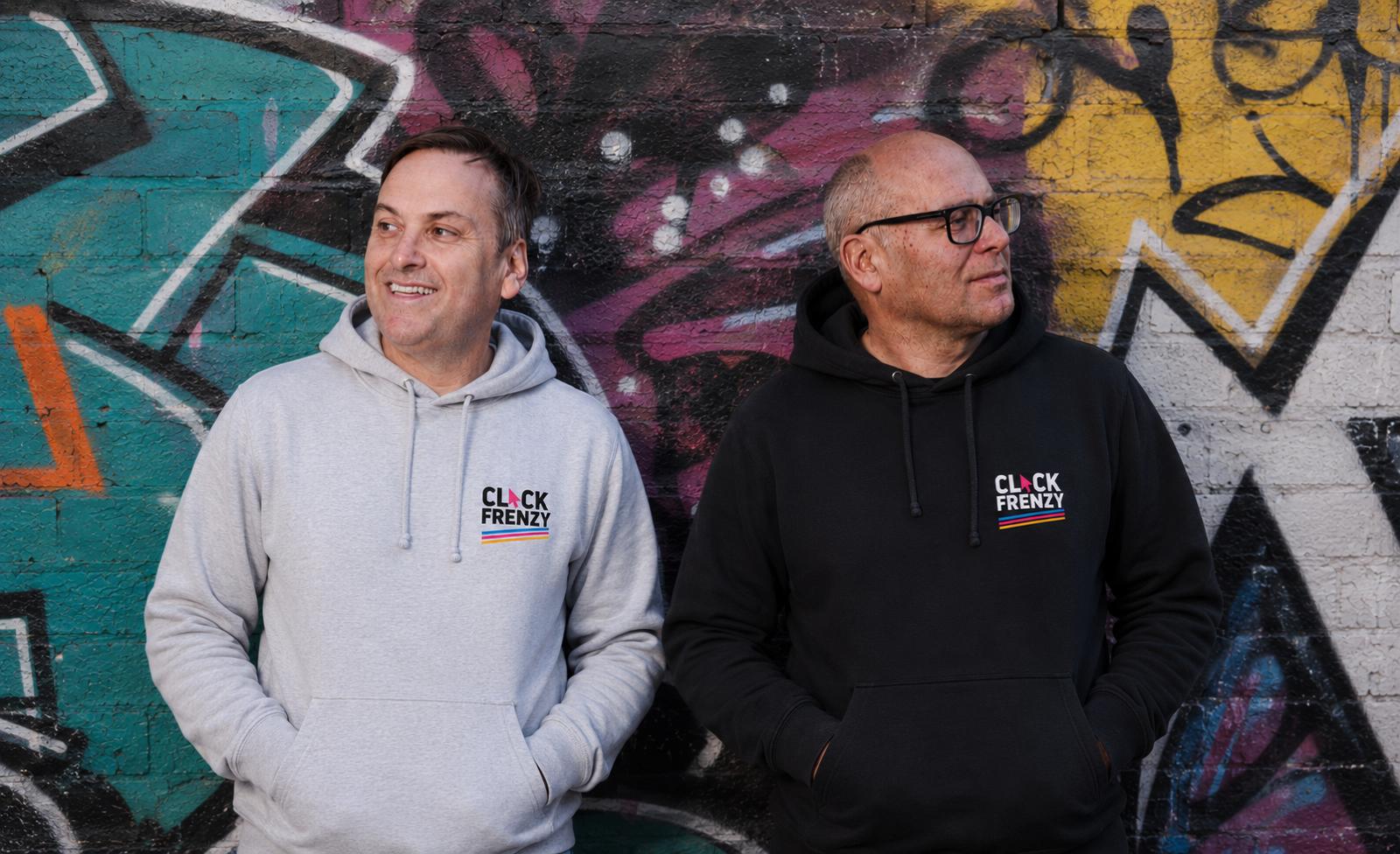
CLICK FRENZY’s new owners, Gabby and Hezi Leibovich, have officially brought the popular Australian end-of-financial-year (EOFY) online sales event back into action from June 18. Characteristically, they have introduced a major incentive for online retailers and e-commerce brands.

Backed by major sponsor Australia Post, Click Frenzy’s new owners are acting rapidly, giving the event new momentum with an offer of free participation for the first 500 retailers and ecommerce brands to sign on this year.

The Leibovich brothers know how to make an impact in the online retailing world – together they founded the landmark Australian online platforms Catch.com.au, Menulog and Scoopon. They want to recover and re-emphasise Click Frenzy as “Australia’s leading online sales event”.

With Australia Post’s sponsorship, Click Frenzy’s EOFY event is expected to feature hundreds of retailers, across technology, fashion, homewares, beauty, sporting goods, travel and more, ranging from household names to emerging online stores. The Leibovich brothers described Click Frenzy as “Australia’s original online mega-sales platform”.

The comeback event marks the first major campaign under the ownership of Australian ecommerce pioneers Gabby and Hezi Leibovich. They said they had plans to unveil a broader vision for the future of the platform in the months ahead, but Click Frenzy is focused on delivering immediate impact this EOFY by helping Australian businesses drive sales, acquire new customers and reach millions of highly engaged shoppers. 
“We are incredibly excited to bring Click Frenzy back for Australian retailers and brands at such an important time of year,” Gabby Leibovich said.

“Click Frenzy has been part of the Australian retail culture for more than a decade and very few retail brands have this level of awareness among both consumers and retailers. We see an opportunity to build on that foundation, with this EOFY sales event as our first step, but we’re also thinking much bigger about how Click Frenzy can play a meaningful role in shaping the future of ecommerce in Australia.”

Hezi Leibovich said, “When we built Catch, our mission was simple: to help Australians discover great deals. That mission hasn’t changed, but what has changed is how difficult it can now be for retailers, particularly smaller businesses, to cut through and attract new customers.

“We wanted to remove as many barriers as possible and create an opportunity for more Australian businesses to participate, get exposure and drive meaningful results during one of the biggest retail moments of the year.

“Thanks to the support of Australia Post, participation is completely free. If you have a great offer, we want to help you share it with Australian shoppers.”

The Leibovich brothers said retailers can register their interest at www.clickfrenzy.com.au/launch


ends

AI is already disrupting work and career opportunities

By Leon Gettler, Talking Business >>

THERE IS NO DOUBT that artificial intelligence (AI) is disrupting work and career opportunities.

A recent study by people2people, Australia’s leading recruitment agency found that entry-level jobs could be the first quiet casualty of workplace AI adoption, with 45% of employers expecting to hire fewer junior roles within three to five years

People2people's NSW managing director Catherine Kennedy said the findings were alarming.

She said marketing, sales and lead generation activities were being particularly impacted by AI taking over jobs from people. The same with junior ‘grunt’ work. 

“Really there’s going to be fewer and fewer entry level and junior types of positions in a whole host of industries,” Ms Kennedy told Talking Business.

“That raises a question around a roadblock around leadership in the long term if we don’t have junior people coming into these different professions.

“How do we build the leaders of the future?”

Yes, it is due to AI adoption

Ms Kennedy said this potential leadership chain interruption was predominantly because of AI adoption.

“The areas that are most impacted now … the functions within business that are quite tangible, very process driven, maybe there’s a lot of data’s that’s being dealt with,” she said.

“So things like accounting, IT … even things like customer service, where there are huge efficiencies, (potentially) having less humans, and having AI do that process.

“But it doesn’t address the wider issue of: are we going to have a workforce in the future? It’s definitely a question we need to be grappling with.”

Smart companies are taking precautions

Ms Kennedy said good companies were now looking at this issue.

“What smart organisations are doing is thinking about what are the things we can get a robot to do, probably better than any human, and let’s free up the human time to do the things that are uniquely human,” she said.

“So influencing, understanding nuance, understanding the context of the data.

“Those are the things so far that robots are not able to beat the humans on. That’s the way things are moving.”

She said all this left business in a predicament.

“Yes there is ‘junior’ grunt work in all kinds of industries, that will be the first thing AI is going to step in and do more of,” she said.

“But if does create that challenge where if you don’t have anyone doing that job, then how do they become in 10 years, or 20 years or 30 years, the CFO or the managing partner or the CEO even?

“So one of the things that tertiary institutions and certainly businesses are grappling with is: what are the pathways for people to get into the workforce?”

Staff not being upskilled in AI

A key problem, according to the People2people survey, was that businesses were not upskilling their employees in AI.

“One of the pieces of data that came out with our research was that while organisations are putting huge amounts of investment and time into how AI can improve their processes, and how they implement it in their business operation, 69% of employees surveyed said their organisation was not preparing them for AI,” Ms Kennedy said.

“So they’re not giving them skills or investing in training and development for them, to be able to utilise this effectively, in the next three or five years, let alone what happens in their career path 10-15 years down the track. 

“It’s a time like no other.”

www.people2people.com.au

www.leongettler.com


Hear the complete interview and catch up with other topical business news on Leon Gettler’s Talking Business podcast, released every Friday at www.acast.com/talkingbusiness  

https://shows.acast.com/talkingbusiness/episodes/talking-business-9-interview-with-catherine-kennedy-from-peo


ends

‘AI can make mistakes’ – Forzan warns small business leaders

By Leon Gettler, Talking Business >>

ARTIFICIAL INTELLIGENCE (AI) is now the big challenge for businesses everywhere. In the last three years, businesses have moved from experimenting with AI to actively deploying it at scale, especially generative AI like Chat GPT.

Adoption has surged, but many companies still struggle to capture full value because they’re still learning.

Matthew Forzan, the founder of Yoghurt Digital, said one of the key problems was that AI can make mistakes. At the same time, however, the problem is compounded because it’s getting smarter all the time. 

Mr Forzan has nearly two decades of industry experience. He is a seasoned digital marketing professional with deep expertise in search engine optimisation (SEO), paid search and social marketing, and user experience.

“It’s good for quick form information – if you want to know what the capital of Australia is or the best place to travel in Melbourne for a coffee,” Mr Forzan told Talking Business. “All those types of things are really good but we’ve seen it have critical errors like how to make cornflakes or boil an egg. Things like that it’s still getting wrong.

“But this is the worst that it’s ever going to be,” he said.

“The problem is that it’s always outpacing things like legislation.”

Identify who is in the driver’s seat of AI companies

Mr Forzan said this meant it was important to look at who was in the “driver’s seat” of the companies behind AI.

“They obviously have a commercial interest there. We’re talking huge valuations, huge salaries of the people they’re recruiting in Silicon Valley,” he said.

“I dare say their interests are potentially not for the human race than for themselves, which opens up some problems too.”

Mr Forzan said different AI platforms were used for different purposes.

“If you look at AI Mode, in the context it’s being used, it’s typically more about finding access to information like websites and things,” he said

“Whereas (with) something like Chat GPT, a lot of people are using it as a therapist or a companion.

“I think that’s where it can start to go off the rails because there’s no layer or lens of protection or validation. I think a lot of children might be picking that up, acting on it, taking it as concrete advice.”

AI has been involved in self-harm cases

Children using ChapGPT and other AI large language models, has unfortunately led to instances around the world of self-harm.

“With children having access to these things, there is a risk they can be influenced in unforeseen ways,” Mr Forzan said.

“And because something is unregulated, left to their own devices, they can be getting incorrect advice and I think there’s an inherent risk there when it’s left unmonitored.”

He said the social media bans for under-16s was a good step forward.

However, he said education in schools had an important role to play as well. There was also scope to better educate parents on teaching their kids how to use AI.

“It’s a fantastic tool when used correctly. It’s a potentially dangerous tool when not used correctly,” Mr Forzan said.

“I don’t think the answer is to not use it at all. It think it should be used at a point of maturity of the individual, and also with the support of their parents and the schooling.” 

www.yoghurtdigital.com.au

www.leongettler.com


Hear the complete interview and catch up with other topical business news on Leon Gettler’s Talking Business podcast, released every Friday at www.acast.com/talkingbusiness

https://shows.acast.com/talkingbusiness/episodes/talking-business-42-interview-with-matthew-forzan-from-yoghu


ends

AI marches on, stepping over businesses

By Leon Gettler, Talking Business >>

ARTIFICIAL INTELLIGENCE (AI) is taking over businesses all over the world.

This has shown up in the latest Udemy Global Learning and Skills Trends report.

There are now 14 new Gen AI enrolments on the Udemy platform every minute. This is in addition to a 98% increase in demand for AI ethics courses year on year.

More extraordinarily, companies learning on Microsoft CoPilot surged 3400%.

Peter Kokkinos, the vice-president and managing director Asia Pacific for Udemy said there has been a tremendous growth across all AI technologies. It’s continuing to grow and have an impact on business in a significant way. 

“It’s not surprising. I’m lucky enough to meet hundreds of organisations around the world and what you’re seeing is different levels of maturity in AI,” Mr Kokkinos told Talking Business.

“Some organisations are full steam ahead. I think what we saw in the past was that some companies are trialling AI in pockets of their business.

“What we are seeing now is large scale and full-scale implementations of AI across all parts of their businesses, whether it be through performance improvement tools, or embedding it into their technologies or how they interact with their customers,” Mr Kokkinos said.

“Organisations that aren’t upskilling in those technologies risk falling behind their competitors.

“The impact of AI is going to change the way we go to market, it’s going to change the way we approach our work every day.

“If we don’t get it right, and we don’t educate our users around responsible use of AI, that’s where the risk is. Using it inappropriately could have a significant risk on a business.”

That said, Mr Kokkinos believes that while a lot of the assessments of humans is done by machines, taking humans out of the equation is a “dangerous proposition”.

However, it can play a significant role in all sorts of human interaction in the workplace, including staff appraisals using role play tools.

Mr Kokkinos said people learning how to develop critical thinking skills when combined with AI allowed them to differentiate.

“I don’t think it’s around learning how to use the tool but learning how to use the tool in a way that makes you more effective,” he said.

“And when you think about it, critical thinking is really where you’re going to differentiate yourself from the next individual.

“If AI tools can perform the menial tasks for you in your job, they can do it for everybody. So how do you differentiate yourself? It’s realty going to be around your leadership skills,” Mr Kokkinos said.

“AI is not going to replace leadership skills. People still want to be led by leaders who are empathetic and caring and thoughtful.

“And being able to make decisions on how and when to use those tools in the appropriate way through critical thinking is going to be the differentiator.”

Mr Kokkinos said learning how to use AI was now critical for everyone at work.

“AI is no longer considered just a tech skill,” he said.

“It’s now embedded across all functions of organisations, be it in marketing, sales, finance, and HR operations. 

“It’s now considered a workplace necessity.

“Like knowing how to use a computer 30 years ago.”


Hear the complete interview and catch up with other topical business news on Leon Gettler’s Talking Business podcast, released every Friday at www.acast.com/talkingbusiness

https://shows.acast.com/talkingbusiness/episodes/talking-business-39-interview-with-peter-kokkinos-from-udemy


 ends

Lumen throws light on ‘vital’ business approaches to digital technology

By Leon Gettler, Talking Business >>

BUSINESSES all over the world need to transform their operations with digital technologies.

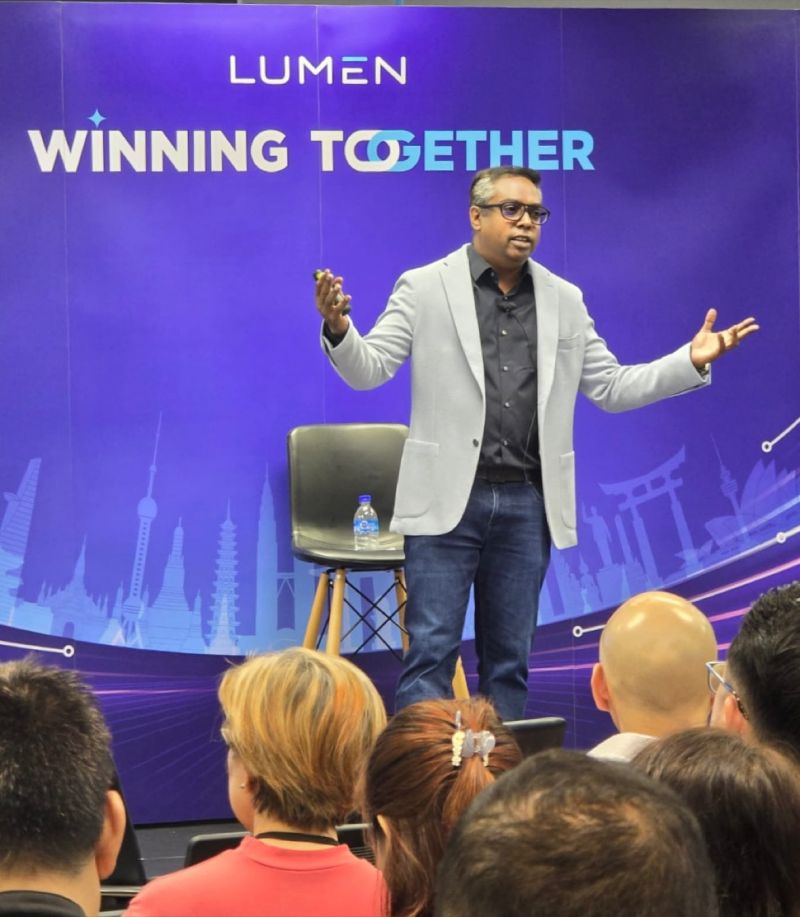
Francis Prince Thangasamy, the Singapore-based managing director for Asia-Pac of Lumen Technologies said there were many challenges, not least of which is cyber security.

But business leaders need to ‘go digital’ for all sorts of operations. Even during tough economic times.

“Regardless of market conditions, organisations will transform,” Mr Thangasamy told Talking Business.

“Regardless of market conditions, organisations need to enable business and drive efficiency.” 

This could be across many areas, he said.

“Transformation has many purposes. Some of it is to drive efficiency. It could be cost savings or it could enable new features focusing on the business,” Mr Thangasamy said.

“It really depends on how much dependency a business has on digital infrastructure.”

Digital impact is global

Being responsible for Asia-Pacific, Mr Thangasamy’s business works with mainly global businesses specialising in all sorts of areas. We’re talking here about verticals like finance, agriculture, retail, e-commerce, logistics and supply chain management.

He said the biggest challenge for companies transforming through digital technology was prioritisation. What comes first?

“You see companies that depend on IT for different aspects,” he said.

“There are companies depending on IT to enable the business to drive efficiency but also you have organisations which are heavily e-commerce driven and IT is driving the business.

“Those are the challenges of prioritisation of budget, of resources,” Mr Thangasamy said.

“How do you serve your business and at the same time modernise your infrastructure and how you get the skill sets?

“Skill sets [can be] quite a common problem globally.”

He said what a lot of companies do to deal with this is they complement what they have internally while training staff. And they leverage expertise from partners and providers.

At the same time, he said, there needs to be strong internal expertise to work with those third parties. So staff have to be trained.

“You need to have strong management program capabilities, people who can reach external partners and internal business units to solve common business problems,” he said.

Cyber security issues loom

One of the big challenges now, for businesses everywhere, including their boards, he said, is cyber security.

Mr Thangasamy said cyber security will be the major issue and focus for Lumen over the next five years.

“We focus quite a bit on cyber security because of the insights that we have on our networks,” he said.

“With that and our managed security services capabilities, we do help organisation modernise.”

But here’s the problem: so many companies now, he said, have invested in different security tools. It creates ‘blind spots’.

“This becomes an issue for companies where they have invested so much money but they still have blind spots, so how do you bring all of that together,” Mr Thangasamy said.

The other issue, he said, was finding security talent. And that is a global problem. How do businesses deal with that?

“What some companies do is get involved in campus recruiting and training people from internal training programs and competing in the market to identify top talents,” he said.

“But definitely that’s a big priority for companies – finding talent.” 

www.lumentechnologies.com

www.leongettler.com


Hear the complete interview and catch up with other topical business news on Leon Gettler’s Talking Business podcast, released every Friday at www.acast.com/talkingbusiness

https://shows.acast.com/talkingbusiness/episodes/talking-business-31-interview-with-francis-prince-thangasamy


ends

Ransomware takes the lead in cyber attacks

By Leon Gettler, Talking Business >>

ALL OVER THE WORLD, businesses are reeling from cyberattacks. The most common of these is in the form of ransomware.

What is ransomware? It uses malicious software, otherwise known as malware, which restricts a business computer’s access to files by encrypting them and then the criminal demands a ransom payment.

In other words, crypto criminals using ransomware hold that business hostage until the payment is made.

Bob Huber, chief security officer and head of research at Tenable, said these ransomware attacks were continuing to grow.

“It’s become a business,” Mr Huber told Talking Business. “The effort to start a business, generally considered a learning curve for any enterprise, takes years of effort and expertise. But ransomware, over the course of the last few years, has been an ecosystem that allows you not to have to be an expert to put out ransomware. 

“There are initial access brokers out there and providers and contract services,” he said.

“So I don’t have to be an expert myself to get into the ransomware game. I can actually contract those services out where I don’t have expertise. So, as much as I hate to say it, it’s lowered the barriers for entry to the market for most entities and organisations. It’s just not as difficult as it used to be years ago,” Mr Huber said.

“You can pick and choose the pieces that are already built. So you don’t have to develop the initial access or some novel attack to gain access or foothold to an organisation. They already exist. You can just click and build these things.”

Ransomware drives 38% of attacks

Ransomware has grown so much that Tenable research has found that it’s behind 38% of all cyber attacks.

Mr Huber said the growth of ransomware would continue as there were not that many businesses that are prepared to make the “commensurate investment in defending against ransomware attacks”.

This, he said, often came down to “foundational cyber hygiene”.

“If you think about organisations, whether they be non-profits, charities that don’t have mandates to make the investment … I’m sure they would like to but they compete against other businesses and risks, you know, economic down turn and pandemic, those are risks as well,” he said.

“They have to balance all those risks and determine where cyber fits into their risks and what they’re willing to accept or transfer. And especially for smaller organisations, they can’t make the investment to measure against those types of attacks.”

Remote work facilitates cyber attacks

Mr Huber said much of the growth of ransomware has come with more people working remotely.

“Given the proliferation of remote work… with people working from home and coffee shops and libraries, we found now that people do tend to travel, they still do their work but some of the controls you would traditionally have in an enterprise that [is] tied to certain types of access, through the facility or through a virtual private network, you don’t have that when you move to the coffee shops,” he said.

“There are other technical controls that were developed for a time when we expected folks to be in a facility,” Mr Huber said.

“And as we migrated to a remote workforce, in many cases we’ve had to loosen those controls to afford people to work from wherever to continue operations for the business.” 

www.tenable.com

www.leongettler.com


Hear the complete interview and catch up with other topical business news on Leon Gettler’s Talking Business podcast, released every Friday at www.acast.com/talkingbusiness

https://shows.acast.com/talkingbusiness/episodes/talking-business-27-interview-with-bob-huber-from-tenable


ends